
Receiving the Day
Most of us were never taught how to receive a day. We were taught how to attack it. What if the paradigm of Sonship changes everything about how we meet the morning?
"The present moment always will be full of infinite treasure." — Jean-Pierre de Caussade
Most of us were never taught how to receive a day. We were taught how to attack it.
We wake up and immediately begin calculating. What needs to get done? What is behind? What is at risk? The day becomes a problem to solve before it has even begun. And somewhere underneath all of that movement is a quiet, exhausting question: Am I enough to pull this off?
I have lived most of my adult life inside that question. I was, by my own honest assessment, a head slave. Disciplined. Productive. Spiritually active. And completely oriented around earning, performing, and proving. The Christian life, as I had unconsciously constructed it, was a performance review with eternal stakes.
What I am learning, slowly and not without resistance, is that there is another way to meet a day entirely.
The Paradigm Beneath the Paradigm
De Caussade was an 18th-century French Jesuit who wrote what became one of the most quietly radical books in the Christian tradition: The Sacrament of the Present Moment. His central claim was simple and devastating: every moment, including the painful ones, the mundane ones, the unfinished ones, is charged with the presence of God. The soul's task is not to manufacture spiritual experience. It is to receive what is already here.
He called it the sacrament of the present moment because he believed God was as present in the ordinary details of a day as He is in bread and wine. The slow healing. The meal with family. The quiet of a Saturday morning. These are not interruptions to the real thing. They are the real thing.
This is not a passive posture. It is, in fact, the most demanding thing I have ever tried to practice. Because to receive the day, you have to let go of the day you were trying to build.
The Slave and the Son
There are two ways to wake up.
The slave wakes up and immediately begins calculating what must be accomplished to justify the day. He sees the incomplete projects, the missed workouts, the tension in a relationship, and he feels the weight of it all as accusation. His worth is tied to the output. His peace is contingent on the outcome. He is always one bad week away from feeling like a failure.
The son wakes up and receives the day as a gift from a Father who has already declared him beloved. He sees the same incomplete projects, the same missed workouts, the same unresolved tension, but they do not define the day. They are simply part of the story that is still being written. The son does not celebrate incompleteness. But he is not undone by it either.
Paul draws this contrast sharply in Romans 8. The spirit of slavery produces fear. The spirit of adoption produces the cry of Abba, Father. These are not just emotional states. They are entirely different orientations toward reality. One sees the day as something to conquer. The other receives it as something to inhabit.
I spent years trying to graduate from slave to son through sheer discipline. It does not work that way. The shift happens when you finally believe, in your body and not just your theology, that you are already loved before the day begins.
What Receiving Actually Looks Like
This is where I want to be honest, because receiving the day can sound like spiritual passivity if we are not careful. It is not. The son is not a spectator. He is an heir who participates in what the Father is already doing.
Practically, I have begun to receive the day by welcoming specific persons of God into it before I do anything else.
I welcome the Gardener to come and prune the areas of my heart that need pruning. I welcome the Good Shepherd to lead and guide me. I welcome the Father to remind me that I am His son and that is enough. I welcome the Teacher to instruct me. I welcome the Provider to provide everything this day requires. I welcome the Great Physician to heal what is broken. I welcome my Friend to enjoy the day together.
This is not a formula. It is an orientation. It is the difference between showing up to a day as the one responsible for making everything work, and showing up as someone who is accompanied by the One who actually holds it all together.
Dallas Willard made a distinction that has stayed with me: grace is not opposed to effort, it is opposed to earning. The son still works. He still trains. He still shows up. But he is not earning anything. He is responding to an invitation.
The Simple Moments Are the Signposts
Last week I had a week that, by most external measures, I should have been frustrated by. I missed a full week of marathon training due to a back injury, with the real possibility of missing another. Projects were incomplete. One of my businesses was in a hard place. After six months away focused on a different project, I got to spend the week working out of my old office again.
The slave in me saw all of it as deficit. The son was learning to see something else.
Getting back to that office turned out to be one of the quiet gifts of the week. Not because anything dramatic happened there. Because it was familiar ground, and there is something about returning to a place that reminds you of who you were before the pressure started. The incompleteness of the week did not cancel the wholeness of the moment.
And then Friday night. Dinner at my parents' house with my wife Libby and my youngest daughter Lily. My other three girls are at JH Ranch, a summer camp in Northern California that has shaped men, women, married couples, families, and college students for decades. So it was just the three of us around a familiar table, eating food I have eaten at my mother's table for years.
No milestones. No mountains climbed. No metrics to report.
And I felt something I can only describe as a deep gladness. Not because the week was finished or the projects were resolved. The unfinished things were still unfinished. But they were not present in the room. What was present was the smell of the food, the sound of my daughter's laugh, the ease of being with people who love each other without condition.
De Caussade would say that moment was full of infinite treasure. I am starting to believe him.
These simple moments are not consolation prizes for a week that did not go according to plan. They are signposts. They are God winking, pointing toward the North Star, reminding you that you are headed in the right direction. Not because of what you produced, but because of who you are becoming. Union. Mature love. Presence. These are the markers of a life moving toward its true destination.
The North Star Is a Place
The tradition has always understood that we are not just practicing contentment for its own sake. We are practicing for a destination.
Heaven is not a metaphor for inner peace. It is a place. The whole biblical narrative is moving toward a garden city where God dwells with His people, where the fractures of this age are finally and fully healed, where the unfinished things are complete. Revelation 21 is not poetry about feeling better. It is a promise about where the story ends.
Which means that every moment of genuine union in this life, every dinner table moment, every unhurried conversation, every morning where you receive the day instead of attacking it, is a rehearsal. A foretaste. A down payment on what is coming.
Abundant life is not the engineered future. It is not the perfect balance sheet, the finished project, or the agreement of everyone around you. Abundant life is available in union. And union is available now, in this moment, in this ordinary Saturday, in this meal you have eaten a hundred times before.
You are not waiting on Utopia to experience the life you were made for. You are learning to receive it, one moment at a time, from a Father who has been offering it all along.
An Invitation
Before your next day begins, try this. Before you open your phone, before you check what is behind or what is ahead, simply open your hands.
Welcome the Gardener. Welcome the Shepherd. Welcome the Father who calls you son.
And then pay attention to the simple moments. The meal. The conversation. The quiet. The laughter of someone you love. These are not interruptions to the real thing. They are the real thing, full of infinite treasure, offered freely to anyone willing to receive them.
The slave is always trying to figure out how to pull the day off.
The son just receives it as a gift.
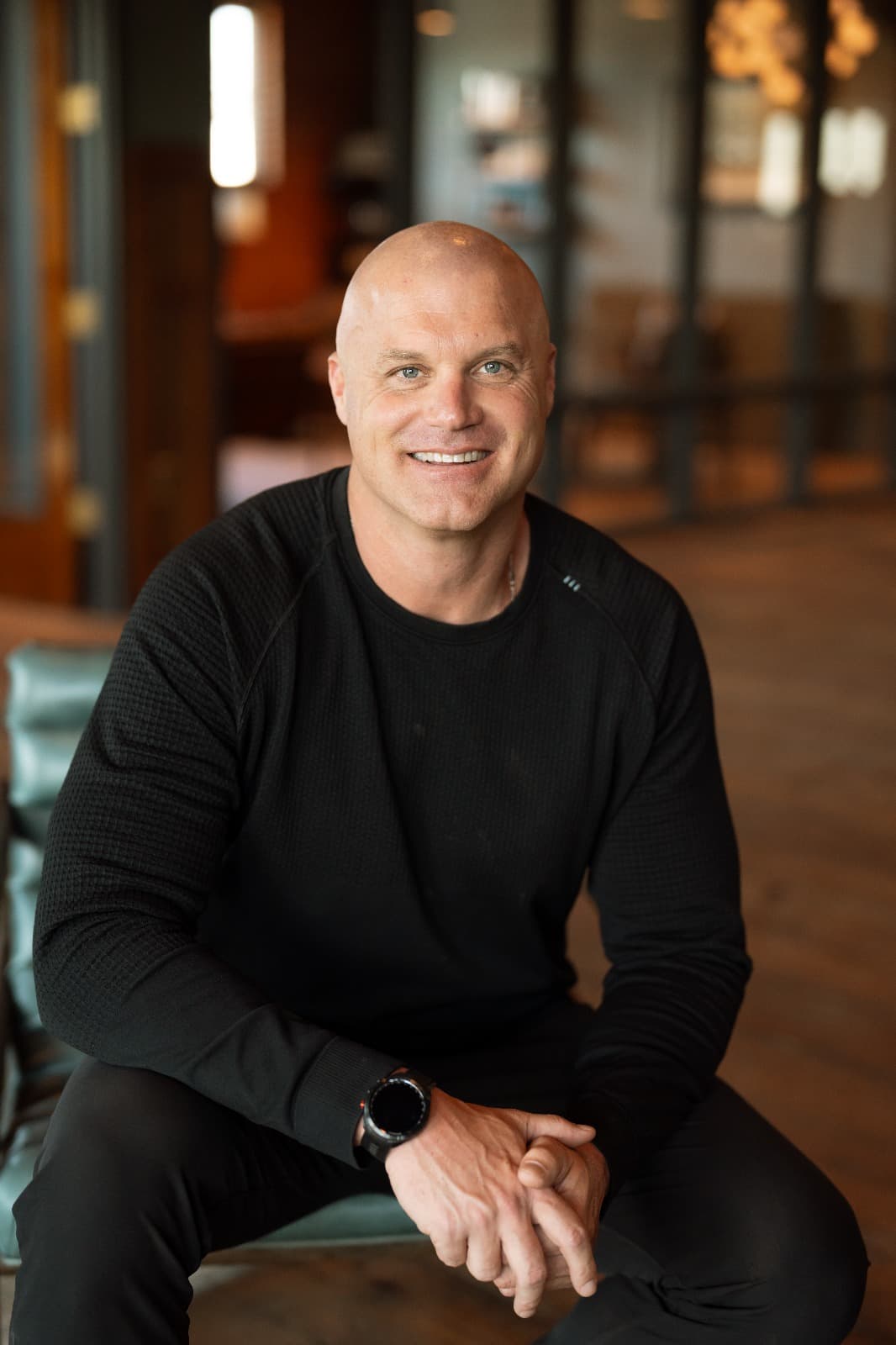
Written by
Chris DeLeenheerChris DeLeenheer is a husband to Libby, a father to four daughters, and a faith-first leader whose life moves between building operating companies, training hard miles, and trying to follow Jesus honestly. He writes and runs out of Waco, Texas, and has spent the last decade quietly learning what it costs a successful man to stay awake — and what it takes, day by day, to find his way back. Quiet Drift is the book from that journey.