The Impossible Made Possible
What Jesus said to the man who had everything — and what it exposes in every successful person today.
"The human heart is an idol factory."
— Tim Keller
The Impossible Made Possible
What Jesus said to the man who had everything
There is a mountain in front of every successful person. Jesus put it there.
Not to discourage. Not to exclude. But to expose.
Mark 10 is one of the most uncomfortable passages in the Gospels. Not because it's hard to understand. Because it's hard to escape.
The Man Who Had Everything
The rich young ruler comes to Jesus with a real question: "What must I do to inherit eternal life?"
He's not a hypocrite. He's not testing Jesus. He's genuinely searching. And by every external measure, he looks like the ideal candidate for the Kingdom. Morally upright. Religiously devoted. Respected. Wealthy.
A pastor friend of mine once said it this way: the rich young ruler would be eligible for most church elder boards.
Jesus looks at him and loves him. Mark alone records that detail. The Greek word is ēgapēsen — the love that chooses, that wills the other's highest good. What Jesus says next is not rejection. It's rescue.
"Go, sell all you have and give to the poor, and you will have treasure in heaven; and come, follow me."
The man's face falls. And he walks away.
Then Jesus says something that shocks everyone in earshot: "It is easier for a camel to go through the eye of a needle than for a rich person to enter the kingdom of God."
The disciples respond: "Then who can be saved?"
Jesus: "With man it is impossible. But not with God."
What Jesus Is Actually Saying
He is not creating a new salvation requirement. Poverty doesn't save. Generosity doesn't earn heaven.
He is exposing the young ruler's true god.
Tim Keller wrote that the human heart is an idol factory. And then he sharpened it further: the thing you most fear losing is often what you worship.
Sit with that for a moment.
What do you fear losing? Not in the abstract. Right now. This week. Your portfolio? Your reputation? Your business? Your track record? Your sense of control over the future?
Whatever your honest answer is, that's the thing worth examining. The money didn't corrupt the rich young ruler. It revealed him. The command to sell wasn't about poverty as a spiritual achievement. It was surgery. Remove the obstacle so the man could actually come and follow.
The five imperatives Jesus gives are worth sitting with: Go. Sell. Give. Come. Follow. The first three deal with what must be released. The last two deal with who must be pursued. The sequence matters. You can't follow with closed hands.
Why Wealth Is Spiritually Dangerous
Wealth isn't evil. Abraham, Job, David, Joseph of Arimathea — wealthy and faithful. The warning is not about money. It's about what money does to the heart over time.
Four movements, if we're honest:
It creates the illusion of self-sufficiency. The wealthy feel less need, less hunger, less dependence. Wealth quietly erodes the posture of a beggar before God.
It competes with God. Mammon promises what only God can deliver — security, identity, significance, freedom, peace. It functions like a rival deity.
It makes earth feel like home. C.S. Lewis observed that prosperity is one of Satan's most effective tools precisely because it makes eternity feel unnecessary.
It magnifies existing idols. Money doesn't change character. It amplifies it.
The Honest Part
Most of us hear a passage like this, feel the weight of it, and go back to our lives unchanged.
I know because that's my story.
It's easy to check off our good works, our spiritual disciplines, the outside affirmations, and the track record of success while missing the inner idols that loom on the inside. We can look like the rich young ruler from every external angle and still be walking away from Jesus.
And here's the subtle trap: it's easy to see generosity as a hall pass to do what we want and miss the whole command. We give. We're generous. We check the box. But we forget the second command — Come, follow me. Generosity without surrender is just philanthropy. Jesus wasn't recruiting donors. He was calling disciples.
One of the most exposing questions I've learned to ask in our guys group: What are you hearing from the Holy Spirit this week? How are you responding?
Most of us squirm. Or we make something up. Because if we're honest, we can't remember the last thing He said. We've been moving through our spiritual disciplines without a bent ear and a willing heart.
The Path Up the Mountain
Three postures. Not a program. A practice.
The Morning Audit. Before the calendar opens. Before the phone unlocks. Ask: What am I trusting today to give me what only God can give? Name it. Confess it. This is what the Shema was designed to do every morning — reorient before the world gets loud.
The Open Hands Practice. This is full surrender. Not just your wallet. Your schedule. Your projects. Your ambitions — the ones you've been quietly building your identity around. Your past — the wins you're still coasting on and the wounds you're still managing. Your future — the plans you've mapped out that you haven't actually submitted to God. Name the things that weigh on your heart. Then put your hands open. And wait. And listen.
The Accountability Question. What are you hearing from the Holy Spirit? How are you responding? You either have an answer or you realize you haven't been listening. That realization is the beginning of metanoia — a turning of the whole self.
The Summit
The mountain is real. Jesus didn't soften it.
But He also said: With God, all things are possible. That's not a consolation. That's the whole point.
The surrender He's asking for — open hands, bent knee, willing feet — isn't something you manufacture through discipline. It's something He produces in you as you keep showing up, keep confessing, keep practicing loose grip.
The goal isn't a man who has conquered wealth.
The goal is a man who has been conquered by Christ.
And that man — whether his net worth is $50,000 or $50 million — is rich toward God.
That's the mountain. The path up it starts this morning.
Written by
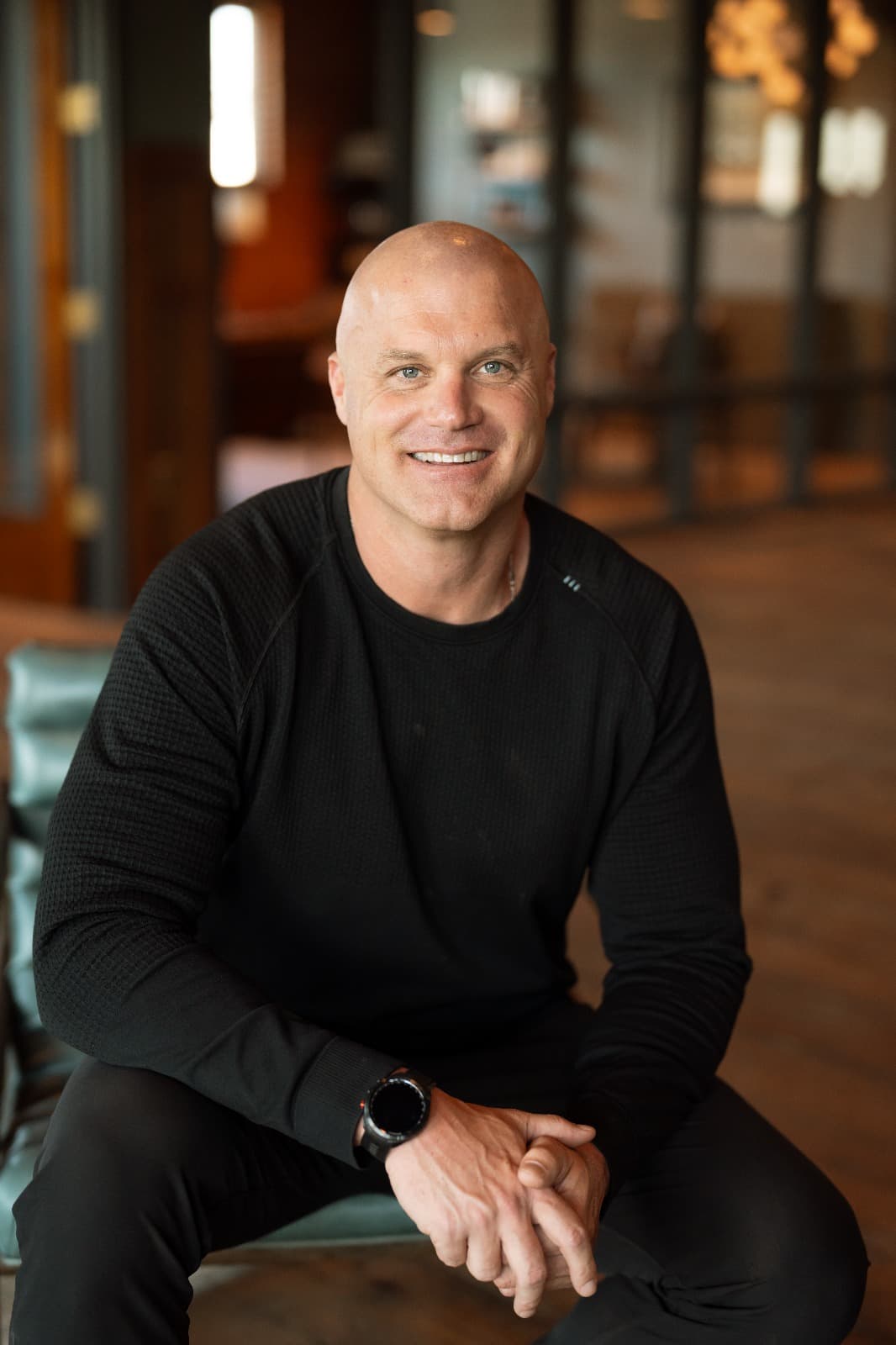
Chris DeLeenheerChris DeLeenheer is a husband to Libby, a father to four daughters, and a faith-first leader whose life moves between building operating companies, training hard miles, and trying to follow Jesus honestly. He writes and runs out of Waco, Texas, and has spent the last decade quietly learning what it costs a successful man to stay awake — and what it takes, day by day, to find his way back. Quiet Drift is the book from that journey.