The Stay Ready Physical Challenge
Six movements. No fluff. The benchmark that tells you exactly where you stand as a hybrid athlete.
"Do not pray for an easy life. Pray for the strength to endure a difficult one."
— Bruce Lee
I've Been on a Search
As a hybrid athlete — someone who wants to maintain real strength while also logging serious miles — I've struggled to find a benchmark that actually tests both. Most fitness standards reward one or the other. Powerlifters who can't run a mile. Marathoners who can't deadlift their bodyweight. Neither is what I'm after.
A few weeks ago I came across a YouTube video of Nick Bare visiting DJ Shipley and the GBRS Group to run their Universal Performance Standards. It stopped me mid-scroll. Watch it here.
The GBRS standard is excellent. But after running through their framework, I wanted something built specifically for the kind of readiness I'm chasing — not tactical operator readiness, but the kind that makes you a better husband, father, leader, and finisher. Six movements. No fluff. A test that tells you exactly where you stand.
So I built one.
The Philosophy
The goal isn't to peak for one race or one lift. It's to maintain a high average across every physical domain — strength, endurance, grip, power, and capacity — week after week, year after year.
The man who can train consistently for decades without breaking down will always outperform the man who trains hard for 90 days and gets injured. Availability trumps intensity.
The target: be perpetually ready. Not impressive — available. Every day of the week.
This test doesn't care about your best day. It asks about your baseline. Can you perform when it actually matters, without warning, 52 weeks a year?
The 85 Stay Ready Challenge
Six movements. Run them in a single session. Write down your numbers. Be honest.
1. 5K Run — Endurance & VO2 Max
What it tests: Your aerobic engine. Your ability to sustain effort over distance. Your mental grit when it gets uncomfortable.
The 5K is the great equalizer. You can look strong in the gym and fall apart on the road. If your cardiovascular system isn't trained, you're running on borrowed time — in the gym and in life.
Baseline: 25 minutes
The average recreational male runs a 5K in 28–30 minutes. Sub-25 puts you in genuinely fit territory. Work toward sub-22 and you're operating at a high level. Sub-20 is elite.
This is achievable. If you're not there yet, consistent Zone 2 cardio 3x per week gets most men to sub-25 within 60–90 days.
2. Bench Press 185 lbs AMRAP — Chest Strength
What it tests: Upper body pushing strength and muscular endurance under a fixed load.
This one separates the men who train from the men who used to train. 185 lbs is a meaningful standard — it's not a beginner weight, but it's within reach for any man who trains consistently. This is a strength endurance test, not a max effort. Every rep counts. No bouncing. Full range of motion.
Baseline: 10 reps
10 reps at 185 implies a 1-rep max around 240 lbs — a solid, achievable target for a committed man within 12–18 months of consistent training. 15+ means you're building something real. 20+ is elite territory.
3. Pull-Ups AMRAP — Back Strength & Relative Pulling Power
What it tests: Upper body pulling strength. Your ability to move your own bodyweight. Back development that carries over to everything.
Pull-ups are the most honest test in the gym. You can't fake them. No momentum. Full hang to chin over bar. Every rep.
Baseline: 10 reps
Men who train regularly average around 6 reps. After two consistent years of training, most men reach 10–12 reps. So 10 is exactly the right floor — it's what consistent training produces. It's not a gift. It's earned. 15 means you're strong. 20+ means you've put in serious work.
4. Dead Hang — Grip Strength & Mental Toughness
What it tests: Grip endurance, shoulder stability, and the ability to stay in discomfort without quitting.
The dead hang is underrated and increasingly recognized as a longevity marker. Research consistently links grip strength to long-term health outcomes — doctors in some countries now use it as a routine vital sign.
Baseline: 1 minute
One minute places you above average for all age groups and represents intermediate-level grip endurance. Most people reach 60 seconds within 3–5 weeks of consistent training. It's the most accessible standard on this list — and one of the most revealing. Two minutes means your grip and shoulders are strong. Three minutes is exceptional.
5. Wall Balls AMRAP (Unbroken) — Power Endurance
What it tests: Lower body power, shoulder endurance, coordination, and the ability to sustain explosive output.
Wall balls expose the gap between strength and conditioning. Standard is 20 lbs to a 10-foot target. The moment you break, the set is done.
Baseline: 50 reps unbroken
Most trained athletes accumulate 30–100 reps in a max unbroken set. 50 sits at the lower end of that range for a fit man — it's a real conditioning test, not an arbitrary number. The Hyrox competition uses 100 wall balls as a standalone station after 8km of running. 50 unbroken cold is a legitimate baseline. 75 means you're in excellent shape. 100 unbroken is a serious benchmark.
6. Trap Bar Deadlift 225 lbs AMRAP — Full-Body Strength
What it tests: Posterior chain strength, hip drive, grip, and the ability to sustain force output under fatigue.
The trap bar deadlift is the most functional strength test in this challenge. It tests everything — legs, back, hips, grip — in one movement. The trap bar's neutral grip and balanced loading make it more accessible than a conventional deadlift, which means the standard here reflects genuine strength, not technique limitations.
Baseline: 10 reps
10 clean reps at 225 is a conservative but meaningful baseline. Any man who trains consistently should be able to get here within 12–18 months. 20 means you're strong. 30+ means you've built something that will serve you for decades.
Your Scorecard
| Movement | What It Tests | Baseline | Your Score |
|---|---|---|---|
| 5K Run | Endurance / VO2 Max | 25:00 min | _____ |
| Bench Press 185 AMRAP | Chest Strength | 10 reps | _____ |
| Pull-Ups AMRAP | Back Strength | 10 reps | _____ |
| Dead Hang | Grip / Mental Toughness | 1:00 min | _____ |
| Wall Balls Unbroken | Power Endurance | 50 reps | _____ |
| Trap Bar Deadlift 225 AMRAP | Full-Body Strength | 10 reps | _____ |
How to Use This
Step 1 — Test yourself. Run all six movements in a single session. Rest as needed between events. Don't sandbag it.
Step 2 — Be honest. Don't round up. Don't give yourself credit for almost. The numbers don't lie and they don't care about your excuses.
Step 3 — Identify your gaps. Where are you below baseline? That's your training priority. Don't train your strengths — train your weaknesses. The chain breaks at the weakest link.
Step 4 — Retest quarterly. Fitness is not a destination. It's a standard you maintain. Retest every 90 days. Track the progress. Let the numbers tell the story.
Why This Matters
I'm not training to be impressive. I'm training to be available.
Available to run with my kids. To carry what needs to be carried. To show up physically for the people who depend on me — not just today but in twenty years.
The GBRS Group built their standard around one question: Can you perform when it actually matters, without warning, 52 weeks a year?
That's the question behind this challenge too.
The 85 Stay Ready Challenge isn't about peak performance. It's about baseline readiness. It's about knowing where you stand — not where you want to be, not where you used to be, but right now, today, as you are.
Take the test. Be honest. Get to work.
Stay ready so you don't have to get ready.
The Question for the Holy Spirit:
Am I stewarding this body for availability to God and others — or for something else?
Chris DeLeenheer is the founder of 85 Leadership and a builder, mentor, and hybrid athlete based in Waco, TX. Subscribe to the 85 Leadership newsletter at 85leadership.com.
Written by
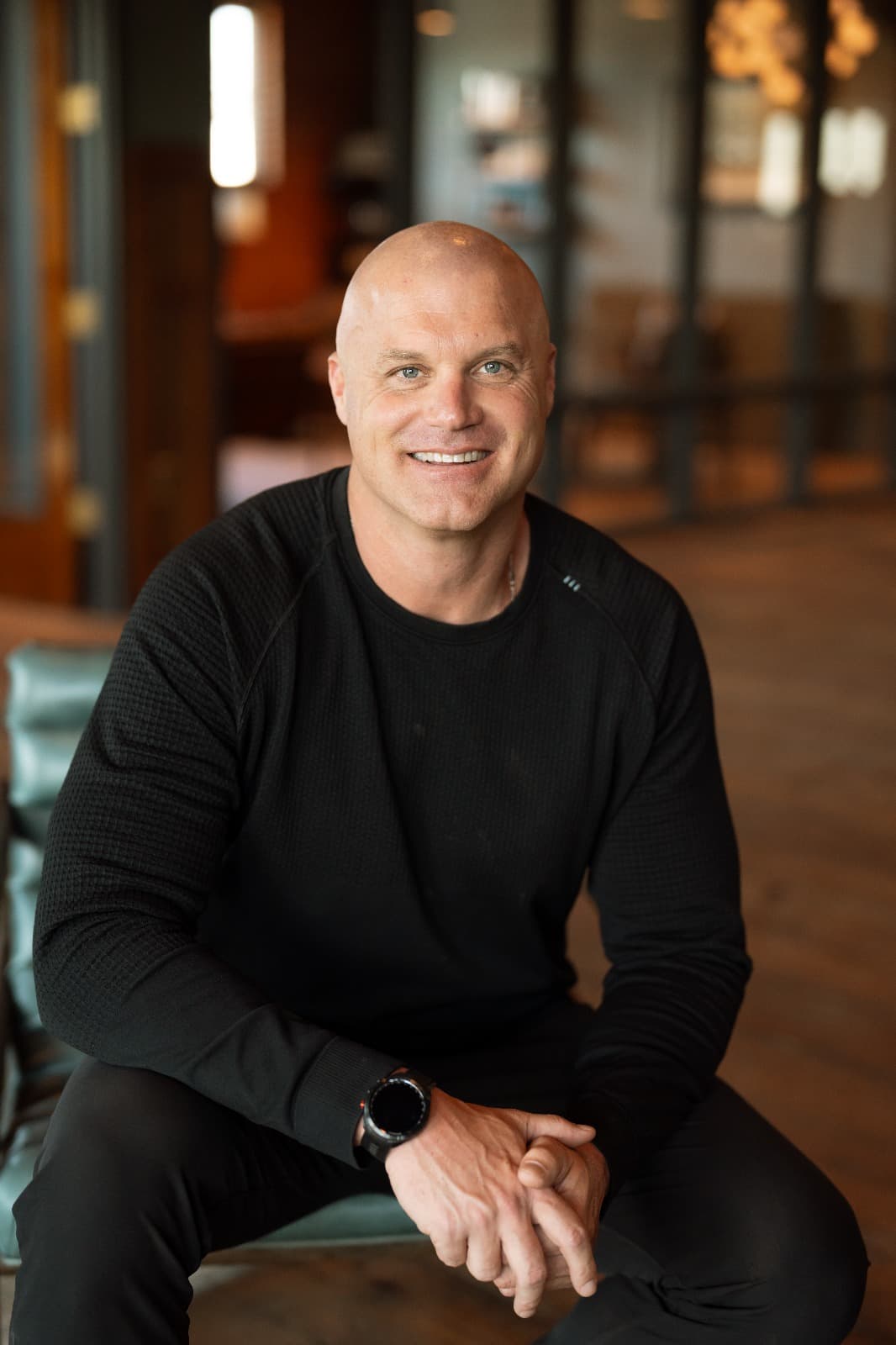
Chris DeLeenheerChris DeLeenheer is a husband to Libby, a father to four daughters, and a faith-first leader whose life moves between building operating companies, training hard miles, and trying to follow Jesus honestly. He writes and runs out of Waco, Texas, and has spent the last decade quietly learning what it costs a successful man to stay awake — and what it takes, day by day, to find his way back. Quiet Drift is the book from that journey.